
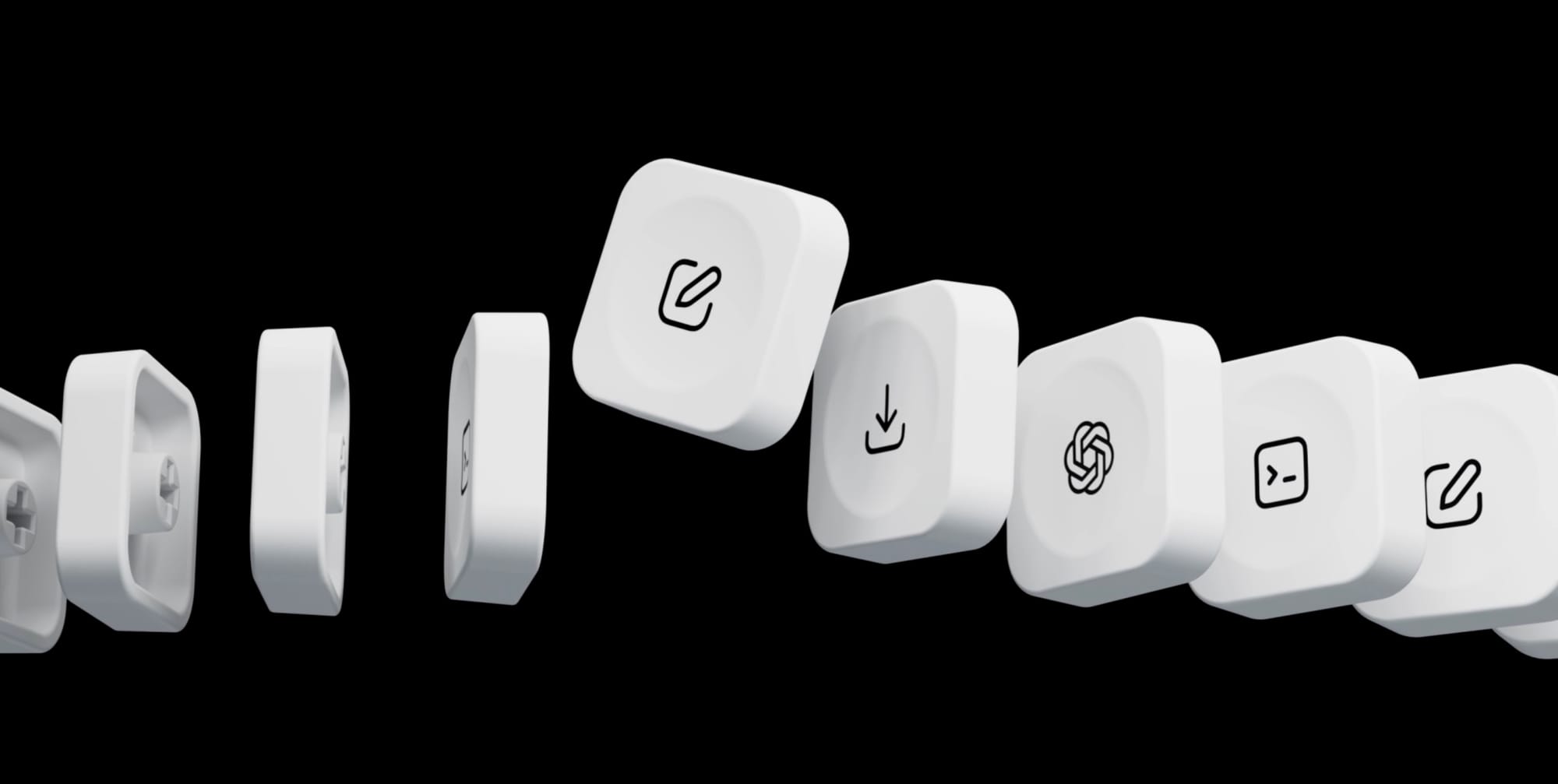
OpenAI's first piece of hardware is a beautifully built $230 keyboard for managing AI coding agents. It sold out almost immediately — and we think that tells you far less about the product than it first appears.
On 15 July, OpenAI shipped its first piece of hardware. Not the screenless, self-moving smart speaker Bloomberg keeps describing, and not the long-rumoured Jony Ive device now caught in a trade-secrets fight with Apple. Something much smaller: the Codex Micro, a palm-sized, glowing keyboard built for developers who spend their days directing fleets of AI coding agents. It costs $230. Within a day, both versions had sold out.
Selling out looks like a verdict. We'd argue it's the wrong one to trust — a limited run selling out tells you a brand is loved, not that a product is needed. And once you look past the launch, the Codex Micro becomes a neat case study in how the industry keeps building the wrong half of a good idea: polishing the parts that photograph well, and skipping the parts that would make the thing indispensable.
What the Codex Micro is, and what $230 buys
Give the object its due. It's a lovely thing — a milled aluminium base, a sandblasted polycarbonate frame diffusing RGB, and a layout designed entirely around agentic coding. Six "Agent Keys" shift colour as an agent moves from thinking, to complete, to waiting on you. A row of command keys handles accept, reject, and new chat. A joystick launches common workflows. And a dial turns an agent's reasoning effort up or down like a volume knob — the one idea here we admire without reservation, because it takes a setting normally buried in a menu and makes it a physical decision at the moment you delegate.
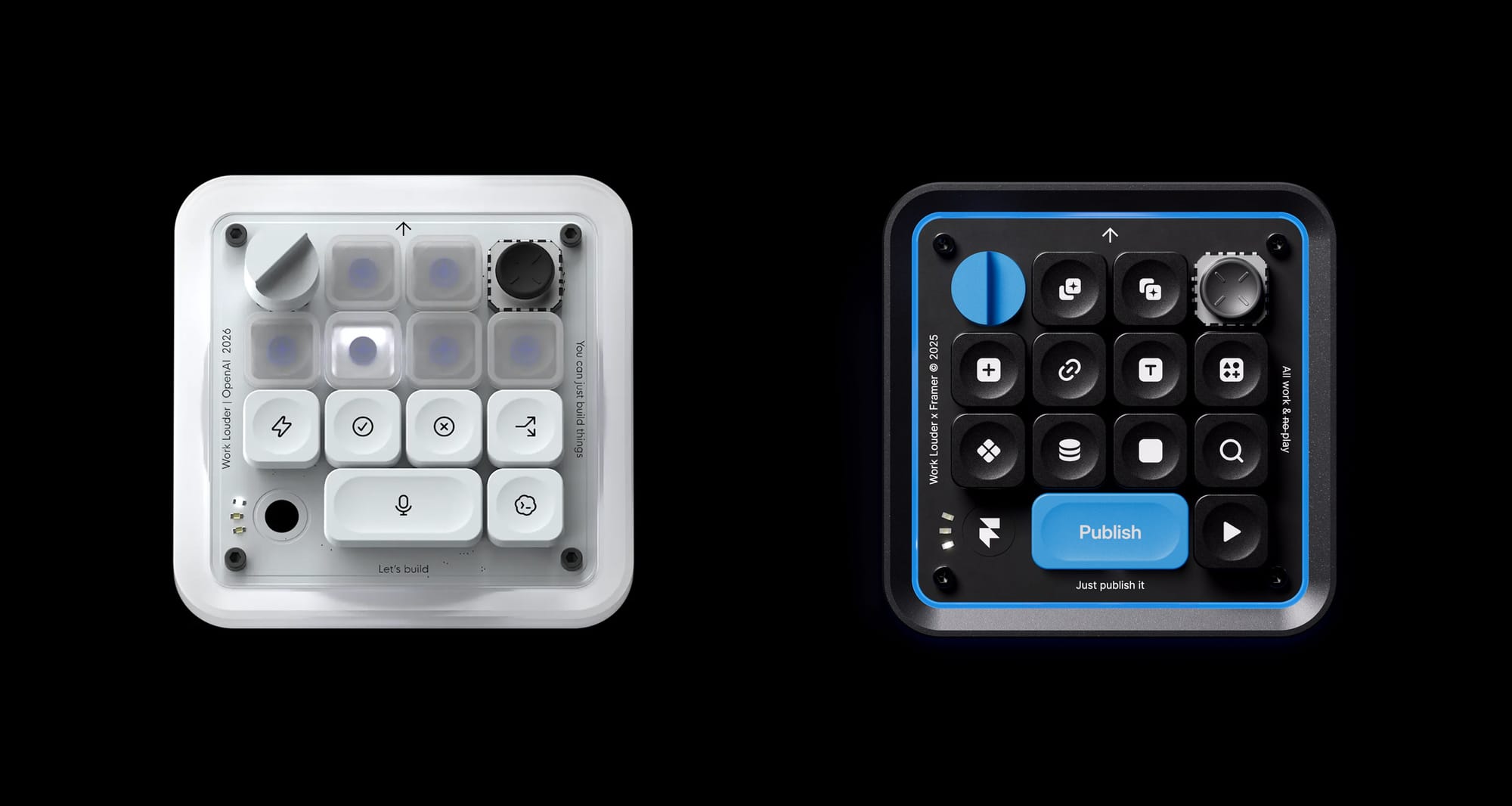
It is also, beneath the branding, a familiar device. OpenAI built the Micro with Work Louder, and it closely follows that maker's existing Creator Micro 2 — the same thirteen switches, joystick, dial and touch sensor, rethemed for Codex. Worth knowing, but it isn't the real story. The real story is the category it sits in.
A category that sells out, then quietly disappears
Physical control surfaces for technical and creative work are not a frontier. They are a settled market. Elgato's Stream Deck has defined it for years. Mechanical-keyboard enthusiasts have been remapping boards and building custom keypads — the KiiBoom Cybrix 16 and dozens like it — for far longer. Logitech sells the MX Creative Console, a dial pad paired with a keypad of adaptive keys, off the shelf today. Anyone who wanted a tactile command centre for their workflow already had several ways to get one, at least one of them for a fraction of the Codex Micro's price.
So there's a pattern worth naming. These products tend to sell out at launch and then fade, rather than building a durable order book. They're bought the way a beautiful pen is bought — once, on impulse, by someone who likes the maker. When the brand is the product, you get a spike, not a sustained line. OpenAI seems to know this; it described the Micro to the press as a limited-run novelty, not a mass-market device. That's a candid framing. It's also the whole problem said out loud: a device most people will admire, a few will buy, and fewer still will be using by winter.
The more interesting question isn't whether the Codex Micro is nice. It's what a control surface at this price should do — and where its design quietly points in exactly the wrong direction.
The feature it should have shipped: fingerprint authentication
Here's the tension almost nobody flags. The moment you add a dedicated keyboard to your setup, your laptop moves. It slides to the side, into a dock, onto a stand in the corner — out of arm's reach. That is the entire reason people buy a second control surface in the first place.
But agentic coding is full of moments that demand you prove it's you. Approving an action, authorising a deployment, signing a commit, clearing a passkey prompt, entering a sudo password — these interruptions arrive constantly, and more of them are gated behind biometrics every year. If the fingerprint sensor lives on your laptop, and your laptop is now across the desk, each of those prompts becomes a reach or a retyped password. And plenty of developers work on desktops with no fingerprint reader anywhere — biometrics simply aren't a given outside of laptops.
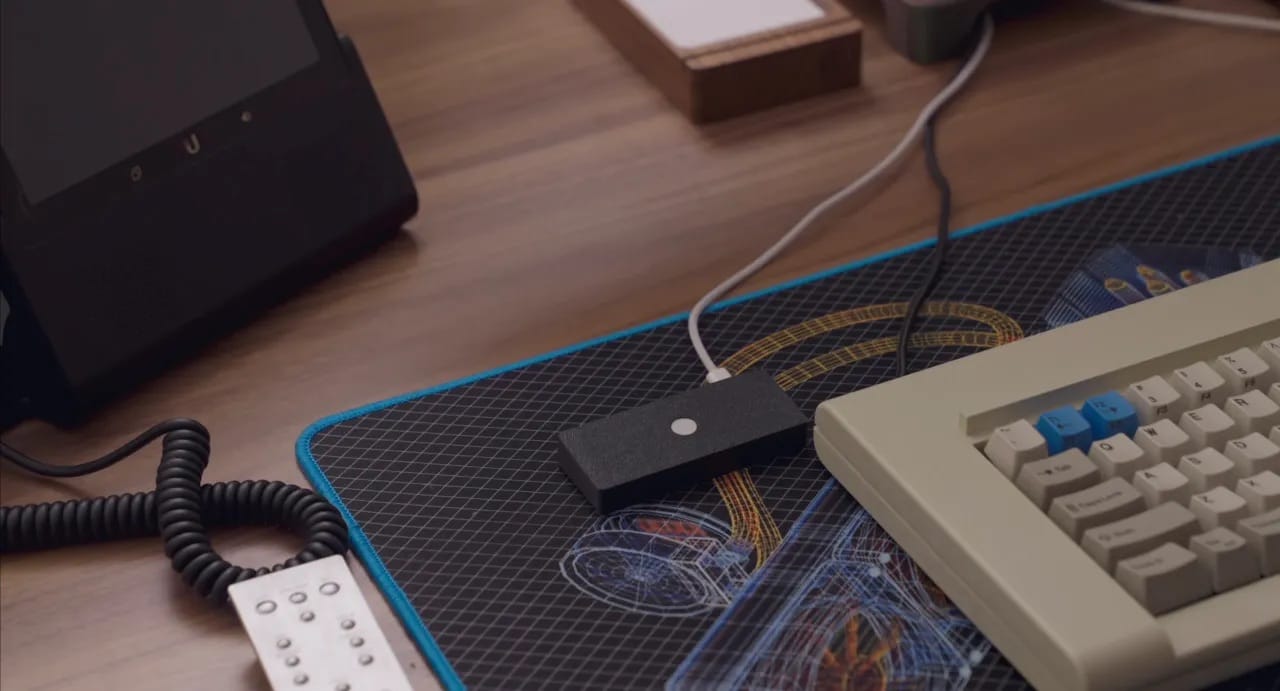
A fingerprint sensor built into the Codex Micro would have solved a real and growing problem: letting you authorise an agent with a thumb on the surface already under your hands, instead of lunging for a machine parked out of reach. That is precisely the kind of job hardware — and only hardware — can do well. It's the feature that would have made $230 defensible. It isn't in the box.
Power developers don't work at a desk — they work from a phone
The second gap is bigger, because it questions the form factor itself. The Codex Micro's headline pitch is voice: talk to your agents, prompt them aloud, keep your hands moving. Yet it ships without a microphone of its own — push-to-talk just routes through your laptop's mic. That's fine at a desk. But the developers who most need to stay in touch with running agents are the ones who aren't at a desk.
Power coders don't sit still. They step into meetings, move between rooms, commute, pace, and context-switch across a dozen half-finished threads. The one device always with them isn't a keyboard bolted to a desk — it's the phone in their pocket. If the goal is to check an agent, redirect it, approve a step, or fire off a spoken prompt from anywhere, the answer isn't a mic soldered into desk hardware. It's a capable, consistent mobile app: dependable push notifications the instant an agent needs input, fast voice prompting, the same Agent-status view you get at your desk, and one-tap approvals. Redirect the effort that went into RGB keycaps into the app most of these users already carry, and you help far more people in far more of the moments that matter.
Notice what these two gaps have in common. Both — biometric auth you can reach, control you can carry — are about untethering the developer from the desk. The Codex Micro does the opposite. It's a gorgeous anchor, arriving at the exact moment the work is trying to get up and walk around.
What comes next for AI-agent hardware
So here's our bet, as a studio that spends its time trying to predict which products last. The eventual winner in "control surface for agentic work" almost certainly isn't a limited drop from an AI lab. It's whoever solves the unglamorous parts: authentication you can carry, control that follows you off the desk, and audio that doesn't depend on where your laptop happens to be sitting.
That might well be Logitech. A next-generation MX Creative Console — on-device biometrics, an onboard mic, agent status that works across any client and syncs to a real mobile companion, at a price that doesn't need a hype cycle — would quietly outclass a reskinned macro pad. It might even be OpenAI itself, if it channels this hardware energy into the software layer where most Codex users already live. What the category needs isn't more personality. It's the boring, load-bearing engineering — auth, audio, mobility — that turns a desk ornament into a tool.
The Codex Micro isn't a failure. It's a beautifully made answer to a question the market had largely already answered, and it sold out because people will happily buy a logo they love. That was never in doubt. The number we'll be watching isn't how fast the next one sells — it's how many are still on desks, and in pockets, six months from now. That's the only figure that separates a product from a souvenir.